
How Open-Source Licensing Works for Independent Bands: The Ultimate Guide
At a Glance
Open-source principles offer independent musicians an unique alternative to copyright. My band Lorenzo’s Music, we release our full DAW multitrack session files, and finished albums and songs under Creative Commons licensing. That means fans and musicians can clone, remix, and sample our work legally. This guide goes over how CC licensing functions in music, and how to choose the right license for your band.
1. Understanding Creative Commons Licensing for Music
Modern copyright law automatically grants “all rights reserved” to creators the moment a song or recording is recorded. While this protects original works, it also creates legal friction that prevents fans, producers, and content creators from sampling, remixing, or sharing your music.
Creative commons licensing adds a layer to your copyright of what you allow others to do with your work. By choosing a CC license, your band grants explicit, upfront permissions for others to share, adapt, and build upon your music without needing complex sync licensing agreements or legal contracts.
Traditional Copyright (All Rights Reserved)
   ├── Strict limits on copying, sharing, and sampling
   └── Requires individual legal contracts for sync and remixing

Creative Commons Open Licensing (Some Rights Reserved)
   ├── Public permission to share and stream legally
   └── Clear guidelines for commercial use, remixing, and stems
2. Choosing the Right Creative Commons License
The Creative Commons (CC) framework offers several licenses based on the specific permissions your band wants to grant:
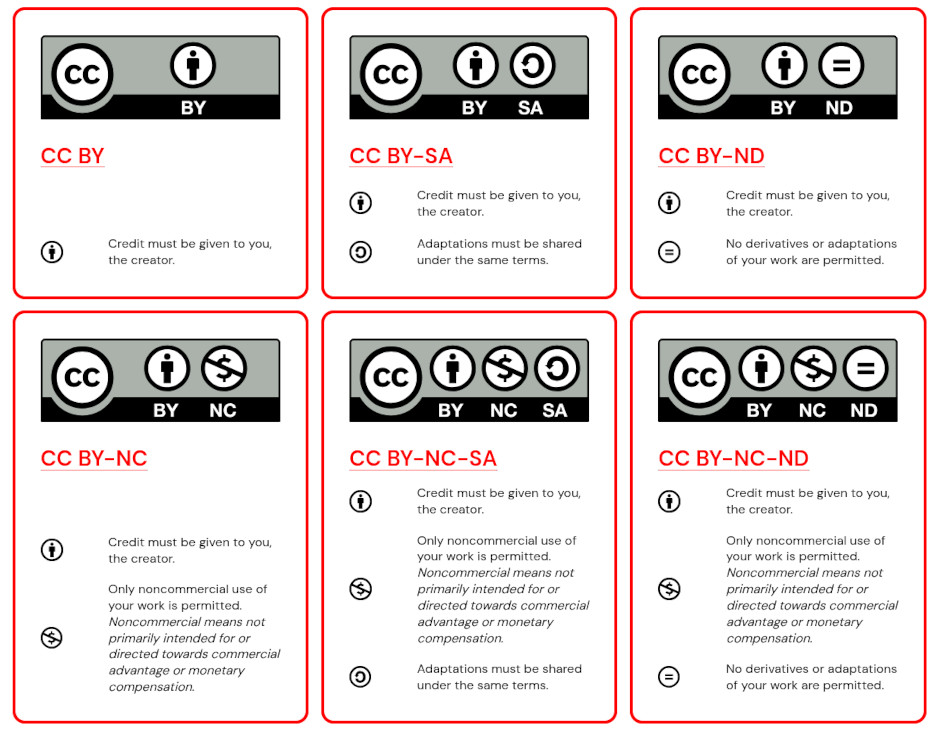
- CC BY (Attribution): Allows others to distribute, remix, adapt, and build upon your work—even commercially—as long as they credit your band.
- CC BY-SA (Attribution-ShareAlike): Allows others to remix, tweak, and build upon your work even for commercial purposes, as long as they credit you and license their new creations under identical terms. This is the primary license used by open-source software and Wikipedia.
- CC BY-NC (Attribution-NonCommercial): Allows others to remix and share your work non-commercially, keeping commercial usage locked for direct licensing deals.
- CC BY-ND (Attribution-NoDerivatives): Allows for redistribution of your original recordings, but prohibits any remixes, sampling, or arrangement edits.
| License Type | Summary of Permissions | Best For |
|---|---|---|
| CC BY | Maximum reach; allowed anywhere with attribution. | Background music for YouTubers & podcasters |
| CC BY-SA | Open-source standard; requires remixes to stay open. | Collaborative bands & open-source communities |
| CC BY-NC | Free for personal use; commercial use requires a fee. | Independent artists wanting sync control |
| CC BY-ND | Original tracks can be shared; no remixes permitted. | Artists protecting original mixes from edits |
I use the CC-BY-SA license because they need to credit you and license their new creations under identical terms. This means that, if you are worried that some big corporation might use your music for something, they would also need to release it under the same license, which the probably wouldn’t want to do. Also, just want to add, I doubt they are trolling the internet for free music by unknown bands. 😁
3. Step-by-Step Implementation: Releasing Songs and Albums With Creative Commons License
Applying Creative Commons licensing to your finished songs and albums is a process that integrates directly into the digital file itself release workflow.
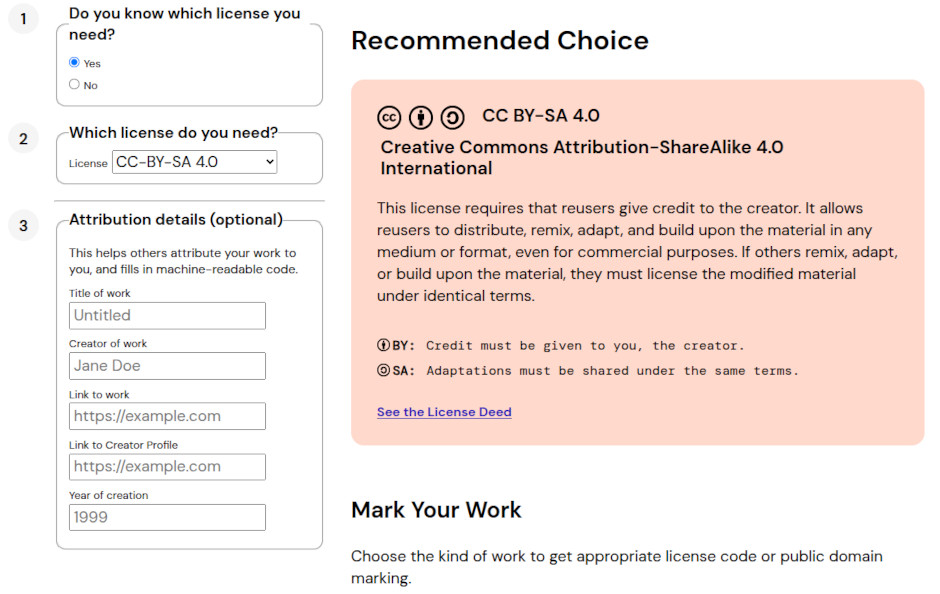
- Use the Creative Commons License Chooser: Visit the official Creative Commons License Chooser to select the exact permissions for your release (such as CC BY-SA). The tool guides you through answering simple questions about commercial use and adaptations, then generates the exact license name, URL, and standardized HTML code block for your release.
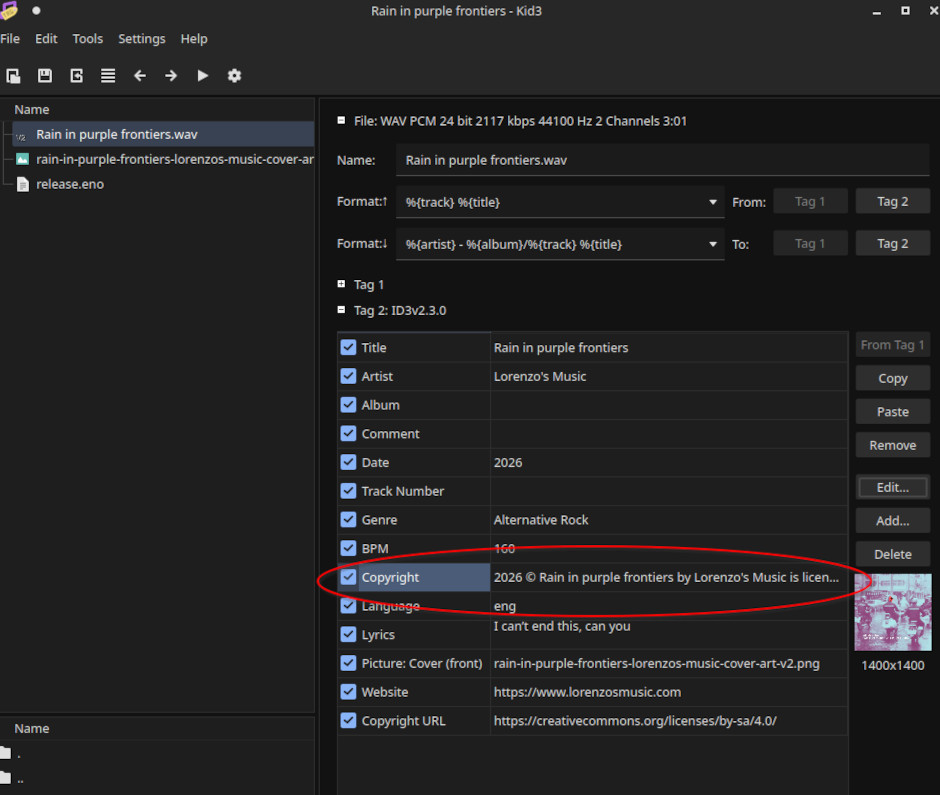
- Embed License Metadata into Audio ID3 Tags: Before uploading your master audio files, write the license details directly into the metadata of your MP3 or FLAC/WAV files using an ID3 editor (such as EasyTAG or Kid3).
- Copyright/License Field: Insert the Creative Commons license rich text (ex: © 2026 Rain in purple frontiers by Lorenzo’s Music is licensed under CC BY-SA 4.0).
- Comments Field: Include a brief statement confirming that the track can be shared and remixed under CC BY-SA terms with attribution.
- Display License Details on Your Website: Paste the HTML snippet generated by the CC License Chooser onto your track or album landing page. This displays the official Creative Commons icons, hyperlinked license terms, and attribution statement directly alongside your audio player and download buttons.
- Enable Creative Commons Licensing on Bandcamp: When uploading your album or track to Bandcamp, choose the license section at the bottom of the track/album edit page. Once published, Bandcamp automatically renders the Creative Commons badge and licensing terms on your public album page, letting fans and content creators know at a glance how your music can be used.
4. How Creative Commons Licensing Grows Your Band’s Audience
Releasing CC music provides several distinct growth advantages for independent artists:
- Eliminating Copyright Strikes for Creators: Content creators, YouTubers, and podcasters frequently search for royalty-free music that won’t trigger automated copyright claims. Releasing music under CC BY means creators can feature your tracks in their productions, driving organic discovery back to your band.
- Producer & Remix opportunities: Inviting electronic producers, beatmakers, and home studio enthusiasts to remix or build upon music can build a new community.
Because my band releases our music under creative commons license our music has been used in video games, movies and videos that people to this day still tell us it’s how they discovered the band. We have also released two remix albums featuring our tracks remixed by musicians from around the world, and our music has been used as samples on other people’s tracks.
5. Frequently Asked Questions (FAQ)
Does releasing music under Creative Commons mean giving up ownership?
No. You retain the full original copyright to your music and recordings. Creative Commons simply acts as a public license granting specific permissions to listeners and creators under defined terms on top of your copyright.
Can an Creative Commons band still earn revenue?
Yes. CC licensing covers permissions for usage and distribution, fans can still support creators directly through merch purchases, physical vinyl/CD sales, live show tickets, and direct-to-fan support platforms. You still get royalties from streaming platforms.
What happens if someone uses a CC BY-SA track commercially?
Under the ShareAlike (SA) condition, any commercial project incorporating your work must also be released under the same CC BY-SA license, ensuring that derivative works remain open to the public. If they still want to use it commercially they can ask you for permission to do that. Or you can even discuss a royalty fee for using it outside the CC license terms.
Join the Open Music Movement
Ready to experiment with Creative Commons music distribution? Explore the license chooser at https://creativecommons.org/chooser.